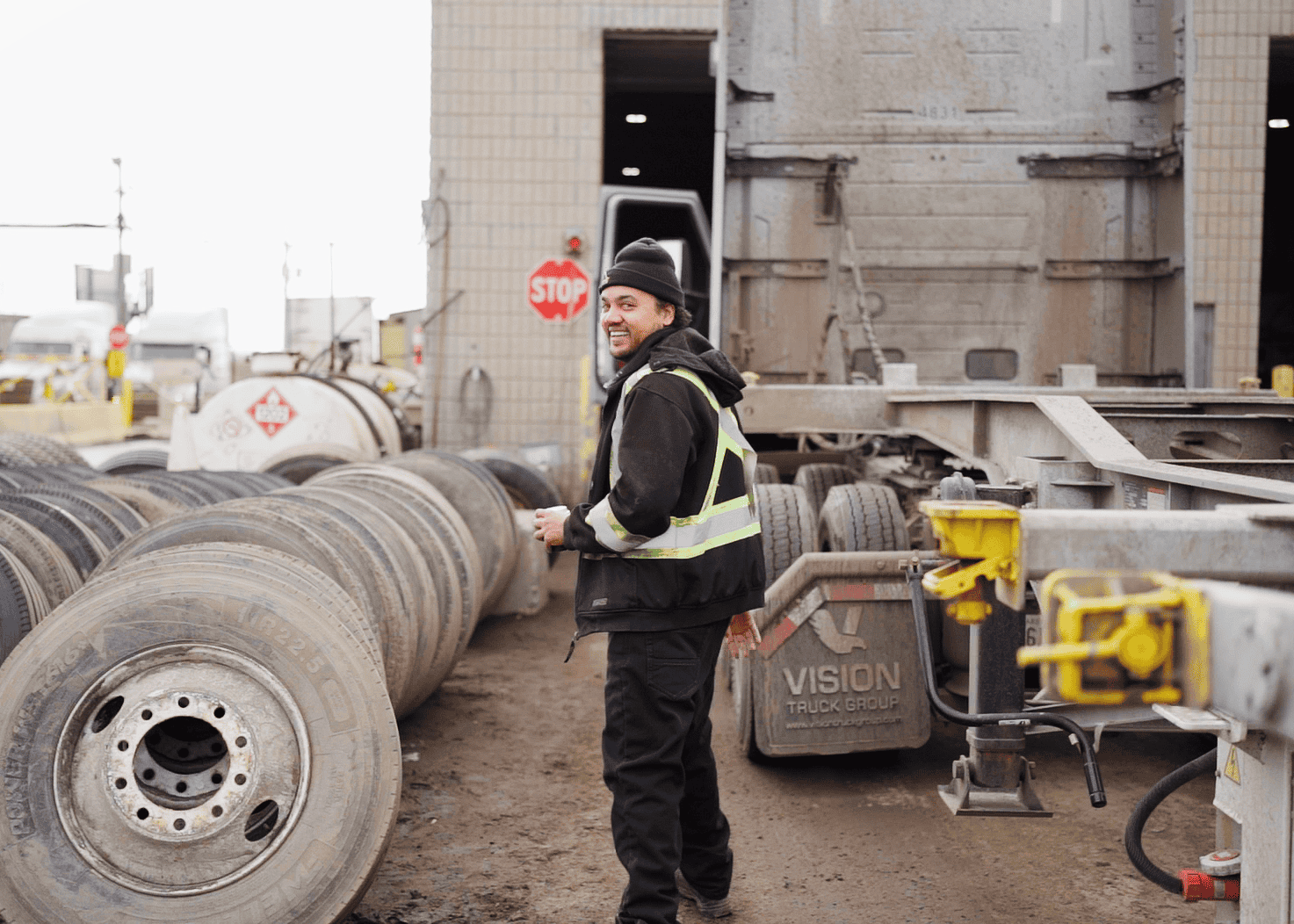
Before the sun fully rises, Elroy’s day is already in motion. Like many Musket drivers, his workday doesn’t begin behind the wheel . . . it starts at home.

“My routine is I drop everyone off—my kids at school, my wife at work and I come home. I pack up my lunchbox, my snacks for the roads. And then I go and get my truck ready.”
From there, it’s a sequence of precision and preparation: pre-trip inspections, paperwork, and multiple yard stops. “If I’m driving container then I go to Southdown and I pick up my container. If I’m driving trailer you have to go all the way to the Cawthra yard to go pick up the trailer. So that’s extra time.”
That difference—container versus trailer—shapes the rhythm of the entire day. Containers bring consistency. Trailers bring unpredictability.
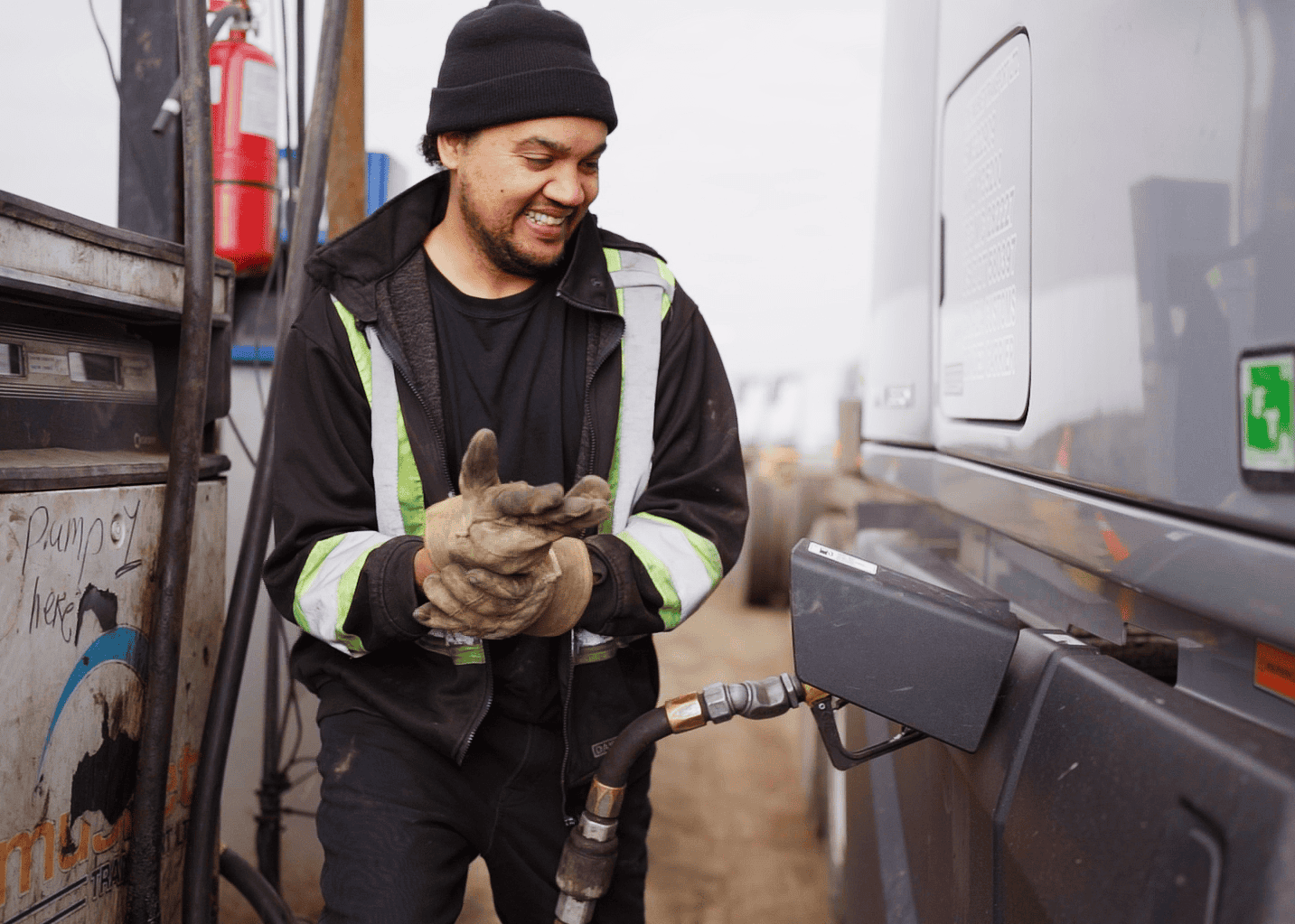
“If I’m driving containers it’s similar. If I’m pulling trailers, it’s more variety,” Elroy explains. And that variety can stretch across the map. “Sometimes they can send you to New York, you can go to New Jersey, you can go to Boston . . . you could be cruising around Pennsylvania.”
HITTING THE ROAD
Once everything is lined up, the real work begins.
“Then the day starts and you’re on the road. You’re fighting with the traffic out of gate to get onto the highway,” Elroy says.
Summer adds another layer. More cars, more campers, more movement everywhere. “We have to be even more cautious on the road. Everyone is going somewhere.”
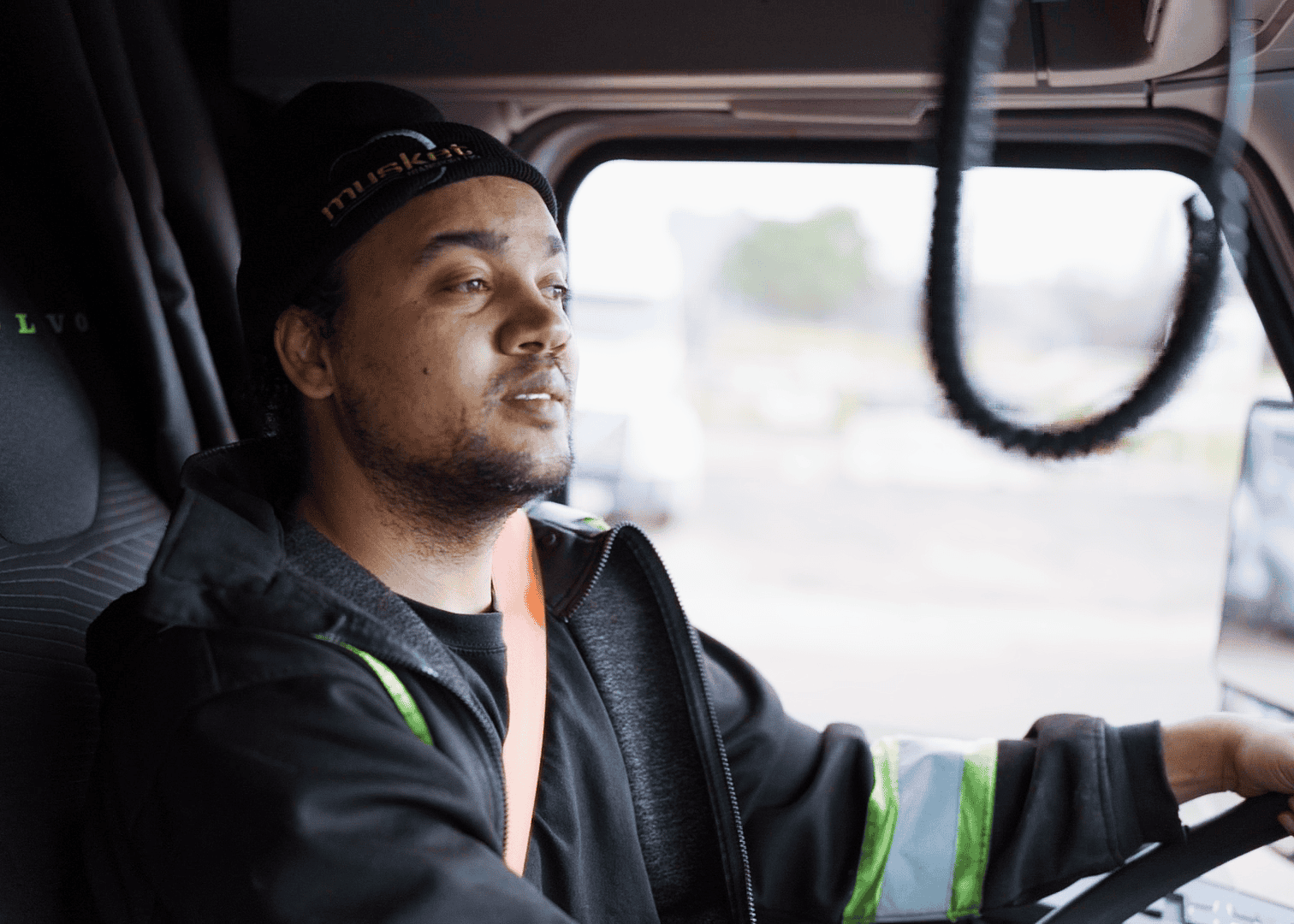
Despite the demands, there’s a rhythm to life behind the wheel. Snacks within reach. Eyes constantly scanning. And sometimes, just quiet.
“Sometimes I don’t even listen to anything. I’m just listening to the truck engine roaring away. Looking at the scenery, smelling the grass. Windows down.”
Other times, it’s audiobooks or music from back home.
THE BORDER AND BEYOND
Timing is everything when heading south.
“You can’t leave too late because if we leave late, it takes longer to cross the border. If you leave earlier, you can get across the border in five minutes. If you leave later, forty five minutes to an hour.”
Once across, the focus sharpens. “Now you’re in the US, you have to be careful. They know they can issue your ticket and you just pay now, because you don’t have time to fight it.”
Breaks are strategic and intentional. “I pick places that are easy to get in and out, and that are not usually busy.”
On a typical run to New Jersey, it’s about two stops, with a required 30-minute break built into the schedule.
AT THE PORT
Arriving at the port brings a different pace. A little slower, more procedural, but no less demanding.
“You stop in the queue and you go and collect your envelope, walk back and then you fill out your paperwork, and close your shift for the day.”
Then comes a rare pocket of downtime. A walk. A meal. Maybe a show.
“You have your supper, put on some Netflix… try to sleep by about 9pm, 10pm at the latest, because you’re going to be up at about 4am.”
The next morning starts early again, entering the port and waiting for the next move. Efficiency isn’t guaranteed.
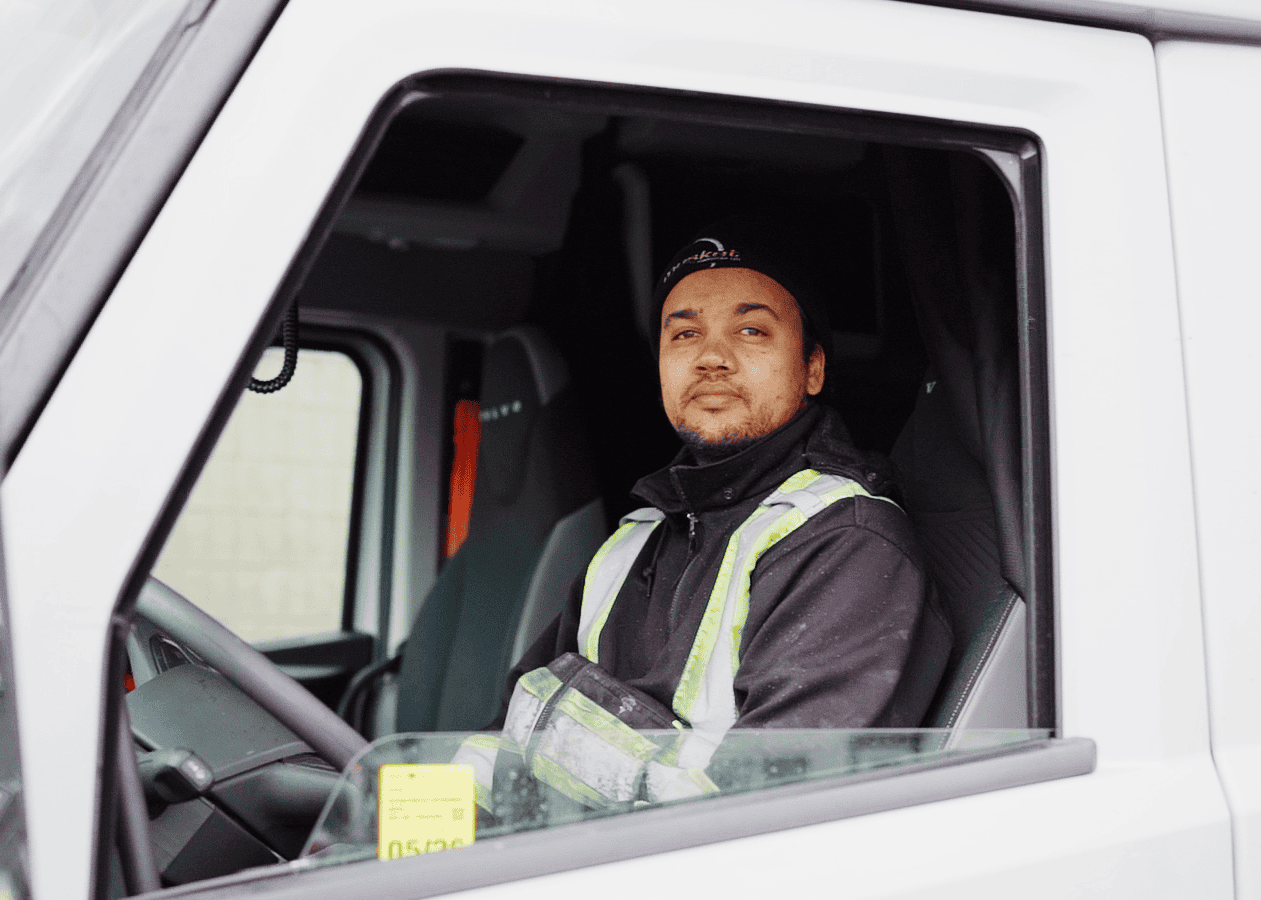
“One time I think I was there 4 hours… other times… 45 minutes. On average it’s between an hour and two hours.”
Once loaded, there’s one more layer of inspection including scanners, verification, and occasionally a deeper check. “They scan the goods and if they want to check it again, sometimes… they stop you and then they can verify with their own dogs.”
THE ROAD HOME
The return trip mirrors the journey down, but with its own challenges, especially traffic.
“You’ll be getting to the border at around 4–5pm, that’s when the traffic is worst.”
Drivers rely on each other to navigate it all. A shared group chat keeps everyone informed in real time.
“If we see something happening, we write on the group… so even if someone is coming from the opposite direction, now they can make an informed decision.”
Back at the yard, the routine continues: drop, fuel, paperwork, reset.
HOME AGAIN
After time away on the road, the return home is simple and grounding.
“My kids come and greet me. I’ll sit down, watch some TV, or play some PlayStation… or go to the gym.”


“It’s a quiet close to a long day, often ending around 8 or 9pm, though trailer runs can push much later. If I’m doing trailers, usually 10pm–11pm.”
WHY HE KEEPS DRIVING
For Elroy, the job isn’t just about the miles, it’s about the feeling.
“I enjoy driving… I enjoy feeling the power of the truck. I enjoy the open road. The peace. And nobody on your neck.”
That mindset, he says, is what separates drivers who stay from those who don’t.
“You know there’s people that do it just because it pays better. They don’t last long, and they’re always complaining.”
The hardest part? It’s not the road.
“The most challenging part I’d say is just starting. You kind of just say OK it is what it is, then go and get on the road.”
And once he’s there?
“Once you’re on the highway with the truck and trailer, everything is easy.”
From early mornings to late-night returns, from quiet highways to crowded ports, Elroy’s day reflects the reality behind every delivery. It’s not just about getting from A to B, it’s about experience, adaptability, and a genuine appreciation for the road ahead.